Writing

Guest Blogger

A first for me, a guest blog post: !  The fine folks at Brevity Magazine invited people to guest blog about the event that consumed 13,000 writers last week: the annual Association of Writers and Writing Programs (AWP) conference.  The blog posts are a great summary of many (all?) of the creative nonfiction-related panels that took place at AWP.  Here is the link to mine, about a great panel I attended on writing about your kids:

AWP 2014: Writing About Your Kids

This year the conference was held in Seattle, the same weekend as the annual Can Do MS ski fundraiser that Wiley does every year.  Thanks to the generous help of my in-laws, Sylvia and Manuel, as well as Wiley and a babysitter, I was able to attend a lot of the conference and some great readings in the evenings, too.  It was wonderful to connect with writing friends and get that nice jolt of writing energy that these events always provide.  Nice to return to my writing desk this week with a bunch of new tools in my toolkit, and a long list of authors whose work I now want to read.  An inspiring week!

Writing

Good Writing Material

My writer friends and I have a phrase we often say to each other while in the midst of a consuming experience, be it a positive or negative one. “Good writing material,” a friend will say after I’ve described a challenging interaction with one of my kids (not that I ever have those), or a hike I took where I got lost.  Life is brimming with good writing material, and we need never worry about running out of topics.

As anyone who has been within earshot of me this fall knows, I am involved in a volunteer role that has both been keeping me from writing and is a great source of stories.  I am the Arts & Enrichment Chair for the PTA at Caleb’s school, a job that sounded like it would be fun and fulfilling when it was described to me last Spring, but instead has turned out to be extremely time- and energy-consuming.  Among other duties, I coordinate the after-school activities.  Without going into details (you’re welcome), I’ll just say that some of my interactions with my fellow parents have caused me a lot of stress and frustration.  It has spawned some interesting conversations with Aki, the Japanese Intern we are hosting, about privilege, and probably will eventually help me learn how to set better boundaries.  Someday I will write The PTA Chronicles, which sounds like fun.  Mostly, though, the experience has made me miss Ahmed.

Ahmed was a patron at the Rainier Beach Library in South Seattle, where I worked as a student intern while getting my library science degree.  A recent Somali immigrant, Ahmed was always warm in our interactions.  One afternoon a few months before my internship ended, I taught a class on how to use databases and the internet.  Ahmed worked as a volunteer for me during the class, translating and providing one-on-one assistance to students.
Image

After the class was over, I handed Ahmed a small box.

“Thanks so much for all of your help,” I said.  He looked down at the box, and back up at me in surprise.

“For me?” he asked.  I nodded, and he opened the box.  Inside was a plain white coffee mug with Seattle Public Library printed on it in black letters.  Ahmed sucked in his breath, stunned, and lifted it out gingerly. “Wow,” he whispered, reverent as he turned it over in his hands.  It was, a co-worker said later, as though I’d handed him the Hope Diamond.  He lifted it above his head with both hands, World Cup trophy-style.

“Thank you Seattle Public Library!” he said.

Thank you, Ahmed, for delighting in such a small thing, and for always appreciating the large and small ways the library staff helped you.  I hope you are well, wherever you are.

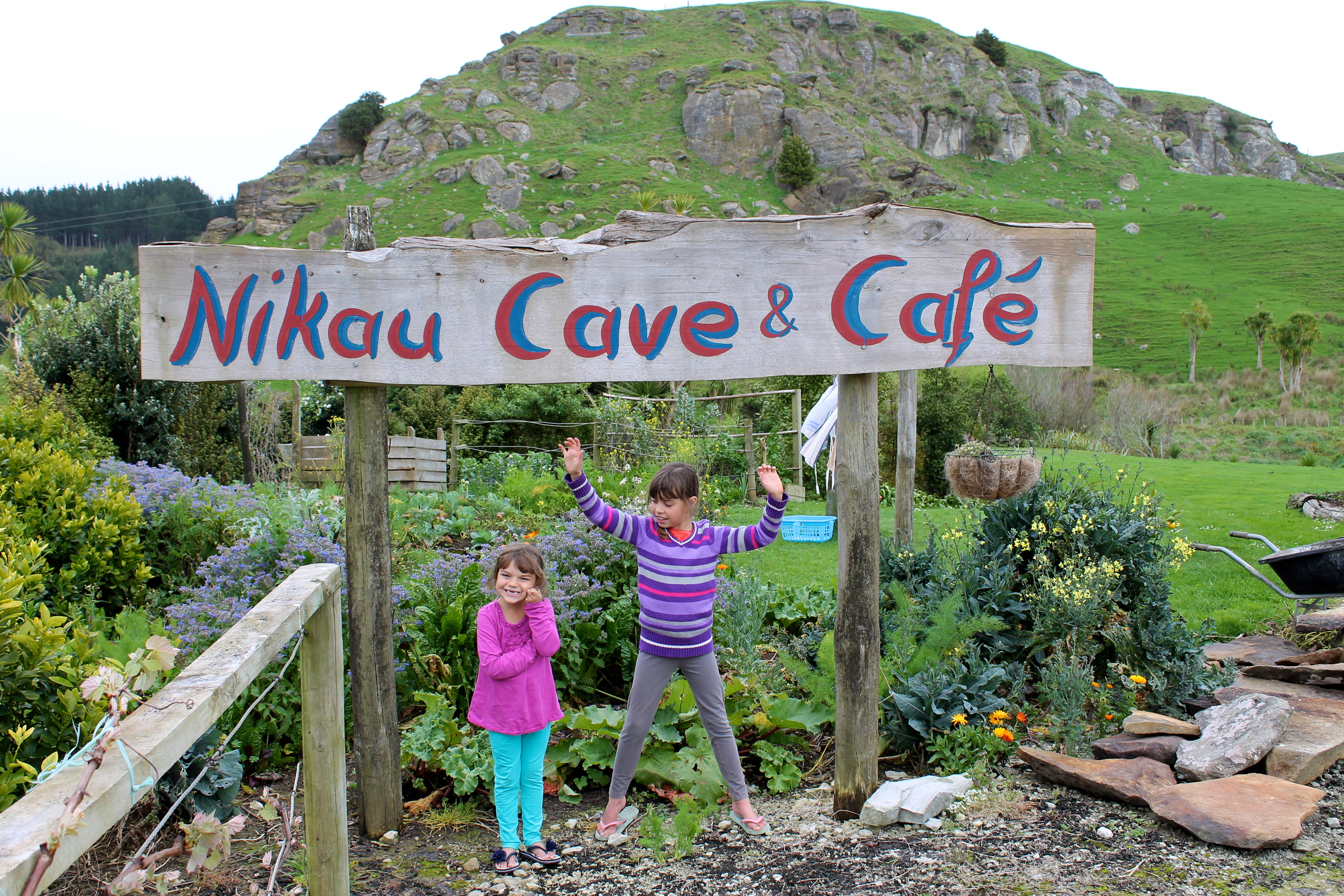
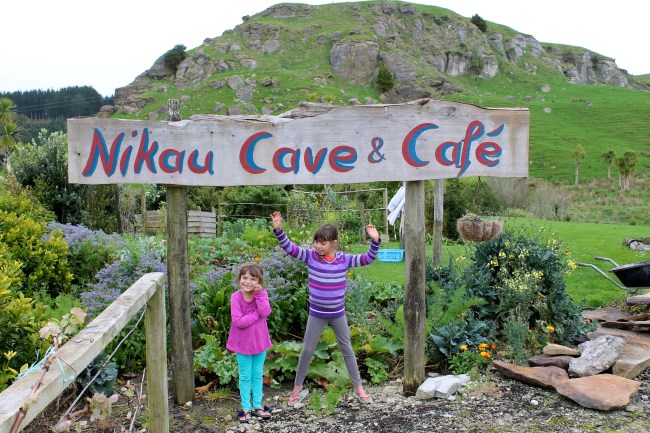
I’m about to embark on a journey that should be a great source of writing material – a two-week family trip to New Zealand!  Our dear friends Penny and Dan and their daughters are living on the North Island for the year, so we decided to seize the opportunity to make the trek.
Image

[Photo by Penny Brandt]. Our lodging for the entire trip will be a campervan, and we are leaving all of our electronic devices at home, including our cell phones.  We are looking forward to spending lots of time outside, spending time with our friends, having new adventures, and detoxing from technology.   We are hoping that sharing a small, undistracted space will not make the 4 of us want to strangle each other, though I’m sure we will have our moments of desire for escape.

Despite an over-busy fall in my non-writing life, I managed to generate a couple of essays, one of which will be published in an upcoming issue of Literary Mama.  This will be my first publication experience with something focused on that endless source of writing material: Parenting.  I also took the time this fall to submit some pieces, something I often claim I don’t have time to do, even though it doesn’t actually take very much time and is a hugely important part of the writing process.  I decided to give an essay I’d written a few years ago (and had rejected everywhere) another round of submissions.  Last week it was accepted by Potomac Review.  I’m very excited to add both of these publications to my author bio, and it’s a nice shot in the arm to have some publication successes after a long dry spell.

Finally, I’m changing the “10 Books that had the most influence on you” list that’s been going around Facebook to “10 great books I’ve read recently that you should go to your local independent bookstore and buy for yourself or your loved ones.”   My list crosses genres and ages and leans mostly (though not entirely) to the left coast.  All are authors I admire, and should be on your radar if they aren’t already:

BEAUTIFUL RUINS by Jess Walter

– My favorite book I read this year

POTLUCK by Ana Maria Spagna

– beautiful essay collection about tiny-town life

THE DIRTY LIFE: a memoir of farming, food & love by Kristin Kimball

– the title says it all

WHEN YOU REACH ME by Rebecca Stead

– middle-grade novel set in 1970s NYC.  Suspenseful and awesome

WE LIVE IN WATER by Jess Walter

– a varied & wonderful short story collection

ENCOUNTERS IN AVALANCHE COUNTRY by Diana DiStefano

– fascinating history of avalanches in Colorado and the Pacific Northwest

THE TENDER LAND by Kathleen Finneran

– exquisite memoir that centers around a family tragedy

EVERY DRESS A DECISION by Elizabeth Austen

–       collection by one of Seattle’s finest poets

LOVE, WATER, MEMORY by Jennie Shortridge

– a captivating novel of amnesia and its aftermath

ME, JANE by Patrick McDonnell

– awesome picture book about Jane Goodall

Happy Holidays & Happy Reading!

Writing

Radio Debut

Capital-P Proud of the Whidbey Writers Workshop MFA program, and specifically the students who read on WhidbeyAIR radio as part of our “Writers Talking to People” class.

Here is the link to the show.

Please take a listen as Alex Clark-McGlenn, Jackie Haskins, Mureall HebertChels Knorr, Nancy Norton, Roz Ray, Martha Schoemaker, and Samantha Updegrave read their work on the air. (Note: As the show’s host says, there’s some adult content in some of these pieces.)

I am at the very end, giving some closing words.  I didn’t think it was possible for me to speak more slowly than I do in real life, but apparently, if I’m speaking on the radio off the top of my head, it’s possible.

Big thanks to co-teacher Stephanie Barbe Hammer for arranging this gig and Gwen Samelson for being such a warm and instructive radio engineer.

Teaching, Writing

Writers Talking to People

Last January, at an Italian restaurant on Whidbey Island, my friend Stephanie and I hatched a plan.

“I have an idea for a class,” she said, “about the public aspects of being a writer.  Do you want to teach it with me?”

“Writers talking to people,” I said.  “I’m in.”

The class would be for students of the Whidbey Writer’s Workshop, the low-residency MFA program we had both completed the previous August.  At the nine-day residencies, held every January and August in Coupeville, students attend morning classes and afternoon seminars.  The seminars are taught by guest faculty, and we proposed this as a pilot class involving the alumni.  We received an enthusiastic response from our director, Wayne Ude, and assistant director Ana Maria Spagna, also a nonfiction faculty member and my former thesis advisor.  Our discussions back in January felt a little like the conversations I had with my surgeons before my first operation – this is an experiment, we aren’t sure what we will discover.  Like my doctors, Stephanie and I forged ahead enthusiastically, hoping at the very least to get a paper in a medical journal out of the deal.  Continue reading

Writing

The View from Tin House

It’s 7 a.m. on Sunday, the day I return home from my week at the Tin House Summer Writer’s Workshop.  This is the transition day, though of course the transition from a week at a writer’s workshop back to my regular life will take much longer.

It’s been an amazing week.  The aesthetic of the workshop can best be exemplified in two of the concurrent lectures that took place on the first day.  In the main hall they had a panel called “The Agent Game” featuring a discussion of the publishing side of things from the 3 agents here with us at the beginning of the week.  Across the circular drive in the chapel, Matthew Dickman, one of the poetry faculty, led a talk called “We Don’t Need No Stinking Agents,” about other non-agenty ways to get your work out into the world.  As the Summer Workshop director Lance Cleland said, “we take our writing seriously, but we don’t take ourselves too seriously.”  Throughout the week there was a lot of laughter and a lot of hard-working writers sharing their ideas with one another.  Each day concluded with faculty readings in the beautiful outdoor amphitheater at the edge of Reed Lake, where ducks landed and took off mid-reading, punctuating the writers’ sentences as they skimmed across the water.

The critique workshop itself was great, especially the supportive and intelligent group of writers who assembled every morning in Vollum Hall, Room 134 to give opinions on how to make our work better.  I’m glad to be able to add some new writer friends to my wonderfully supportive writing community.  Continue reading

GUTS, Writing

The Next Big Thing: GUTS

Big thanks to Stephanie Barbe Hammer, author of THE PUPPET TURNERS OF NARROW INTERIOR: A NOVEL IN STORIES, for tagging me in the Good Reads project, THE NEXT BIG THING.  Below is a first for me; a self-interview about my memoir.

What is the title or working title of your book?
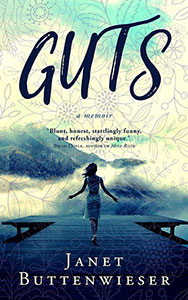
GUTS

Where did the idea come from for the book?
I used to be a teen services librarian, and, while in that job, I served on a committee that put together themed booklists for teens.  One year we did a themed list about illness, so I read a lot of books about illness, including memoirs.  It was a lot like when I was in high school, and got obsessed with books about the Vietnam War.  Only this time, I could do something other than get depressed.  I could write my own illness memoir, about my health problems related to a tumor I had on the outside of my intestine.  So that’s how the book started out.

And then one of my closest friends, Beth, died of cancer.  We had talked about writing a book together about our experiences of tumors, surgeries, trading roles of patient and caregiver.  But it was one of the many experiences I didn’t get to share with her.  Instead, I wrote about my experience of having her die, about her illness, my illness.

I started doing triathlons as a way to celebrate my health, and then as a way to honor Beth.  So it all came together: illness, health, loss, strength, friendship.  Swimming, biking, running.  Though illness is still a big part of the story, I don’t think the book belongs in the category of “illness memoir” anymore.

Continue reading

Writing

A Horse With No Name

When I was twenty-three, on vacation in New Zealand, I was thrown from a horse.  Not thrown, actually.  I fell off.  Slid off.  But it sounds better to say thrown.  More badass and athletic.

We’d decided to go on a guided horseback ride, my sister and brother-in-law and I.  Our other choice for the day’s activity was to swim with seals, but that was more expensive, or all booked up, I can’t remember.  The horseback ride was pretty, the horses walking and trotting and cantering, just for a quick minute, on trails through low hills in countryside that looked a lot like the Pacific Northwestern United States, where I would move four months later, though I didn’t know it yet.  Despite my general fear of horses, I had a good time.

At the end of the ride, the guide’s horse walked over to a field by the little hay barn where we’d started, and stopped.  My sister’s horse did the same, and then Andy’s, with mine bringing up the rear.  Only mine didn’t stop at the field like the other horses.  He steered left, aiming for the pile of hay outside the barn.  I was hungry after our long ride, so it made sense that the horse was too, given that he’d done all the work.  I let him walk over to the hay pile, where I figured I’d dismount with the same grace the guide had dismounted from hers.

Only he didn’t stop.  There was another horse over by the stable, eating her own hay, and my horse, due to a horse-crush or the desire to have the hay piles all to himself or I-don’t-know-what, ran at the other horse.  A short chase ensued, the pursued horse bolting for the little hay barn, and my horse following at a gallop.  Continue reading

Writing

It’s Not (Just) About the Doping

This morning I woke a few minutes before my alarm, so I was fully alert, in that pre-caffeine way, when the radio clicked on, the NPR commentator delivering news I’d been waiting for: Yesterday Lance Armstrong announced he’s stepping down from his role as chairman of the Livestrong Foundation.  “Good,” I said, not very quietly, to my still-waking husband.  We’ve supported Livestrong through donations.  The backpack I use to cart around my laptop is a Livestrong backpack, given to my husband for being such a good fundraiser for the cycling event he did with their organization.  I’ve wanted them to remove Armstrong as chair ever since the United States Anti-Doping Agency went public with evidence that Armstrong was the ringleader of what it calls “the most sophisticated doping program in recent sports history.”  Much of the USADA’s evidence comes from Armstrong’s teammates, who testified of Armstrong demanding that they dope in order to help him win.

Armstrong denies the allegations, and, not surprisingly, still has many supporters, even in the face of a 200-page report of evidence against him.  He’s already lost his seven Tour de France titles, and been banned from competitive cycling for the rest of his life.  Today he lost his Nike sponsorship; other companies are likely to follow suit.

As a mild cycling fan, none of this would bother me too much.  Doping is rampant in many sports, I’m learning, and it’s unsurprising that a cycling star would turn out to be on The Juice.

It’s the Mom in me that’s upset about this news.  Specifically, the Mom of a five-year-old boy who looks like he might be something of a sports star himself.  It’s too soon to tell, of course, but he’s been turning heads at the park ever since he learned to dribble a soccer ball at the age of two, and self-reports that he always wins the running races in gym class.  He’s adopted, which is not really relevant to the story, except to say that, if he did share genetic material with my husband and me, we wouldn’t be having this conversation.  Continue reading

Writing

Day 11: “I Don’t Ride in a Car Anymore”

Day 11 (Monday 10/15)

A very rainy Sunday evening saw Wiley and I in the living room, bent over our calendars.  We were figuring out the week’s schedule: exercise, kid pickup, birthday parties and soccer games and date night.  For the month of October, my Mondays look like this: put Caleb on the school bus, drop Helen at preschool, get myself to Greenwood and carpool to and from Burien to tutor, then get home with a bit of time to spare before Caleb’s school bus pulls up at the end of our block.

I’ve been doing everything but the 20 miles between Greenwood and Burien on my bike.  But, even though I said I was ready for bike commuting in the rain, I’m not entirely.  I don’t want to leave Helen’s bike trailer in the rain all day at preschool.  And, although biking in the rain is a common activity for me, I’m used to getting soaked and then coming home to a warm shower and dry clothes at the end of the ride.  Tutoring is a five-hour affair, and needs to be done with dry clothes.  So, I either need to bring a change of clothes in my pack, or wear rain pants and broil on the ride up the hill.  I know that this is a conundrum real bike commuters with real offices

I look up from my phone calendar at Wiley.

“I think I’ll take the bus tomorrow.”

Continue reading

Writing

Day 8: Fair Weather Bike Commuter

The thick cloud cover this morning was a good ease-in to what’s on tap for later this week: the return of The Rains.  I’m having a lot of conversations that make Seattleites sound like parents whose kids’ come-from-behind team is about to get eliminated from the playoffs.  “We’ve had a good run of it,” we’re all saying about the long strand of sunny days.  “We never thought we’d get this far into October.”  It has been great to pedal from neighborhood to neighborhood with the sun in my face or at my back.

The weather, too, made it easy to have a car-free weekend (days 5 & 6).  On Saturday, we biked up the street to the park for Caleb’s soccer game.  Even though the park where all his games are held is only 5 blocks from our house, this is the first time we haven’t driven, I’m embarrassed to admit.  I was proud for two reasons: Caleb scored his first goal (a great sliding shot right at the whistle), and I was organized enough to pack a picnic lunch so that we could hang out at the park after the game.  The afternoon went by quickly, and then we traveled by foot/scooter/tricycle to our friends’ house for dinner.  They live six blocks from our house in the opposite direction from the park, and we would have driven for fear that the kids would be too tired to get home on foot.  But it worked out fine: Helen on Wiley’s shoulders, Caleb on the scooter, and I carried the tricycle home.  Continue reading